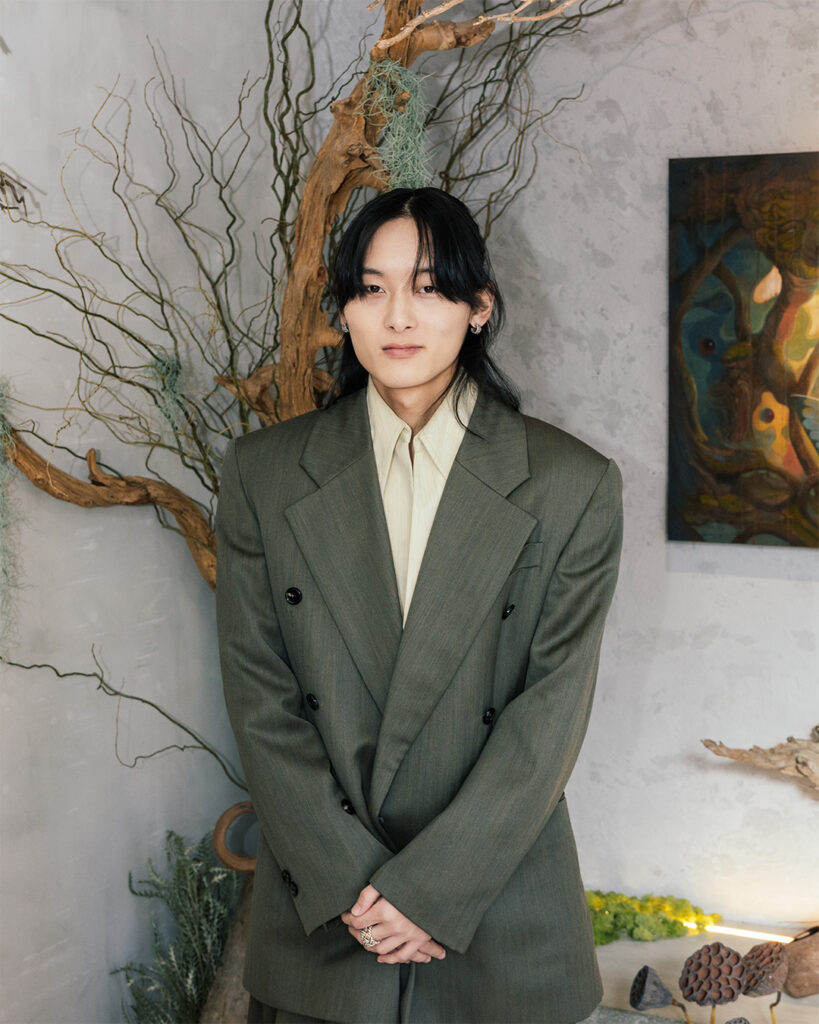
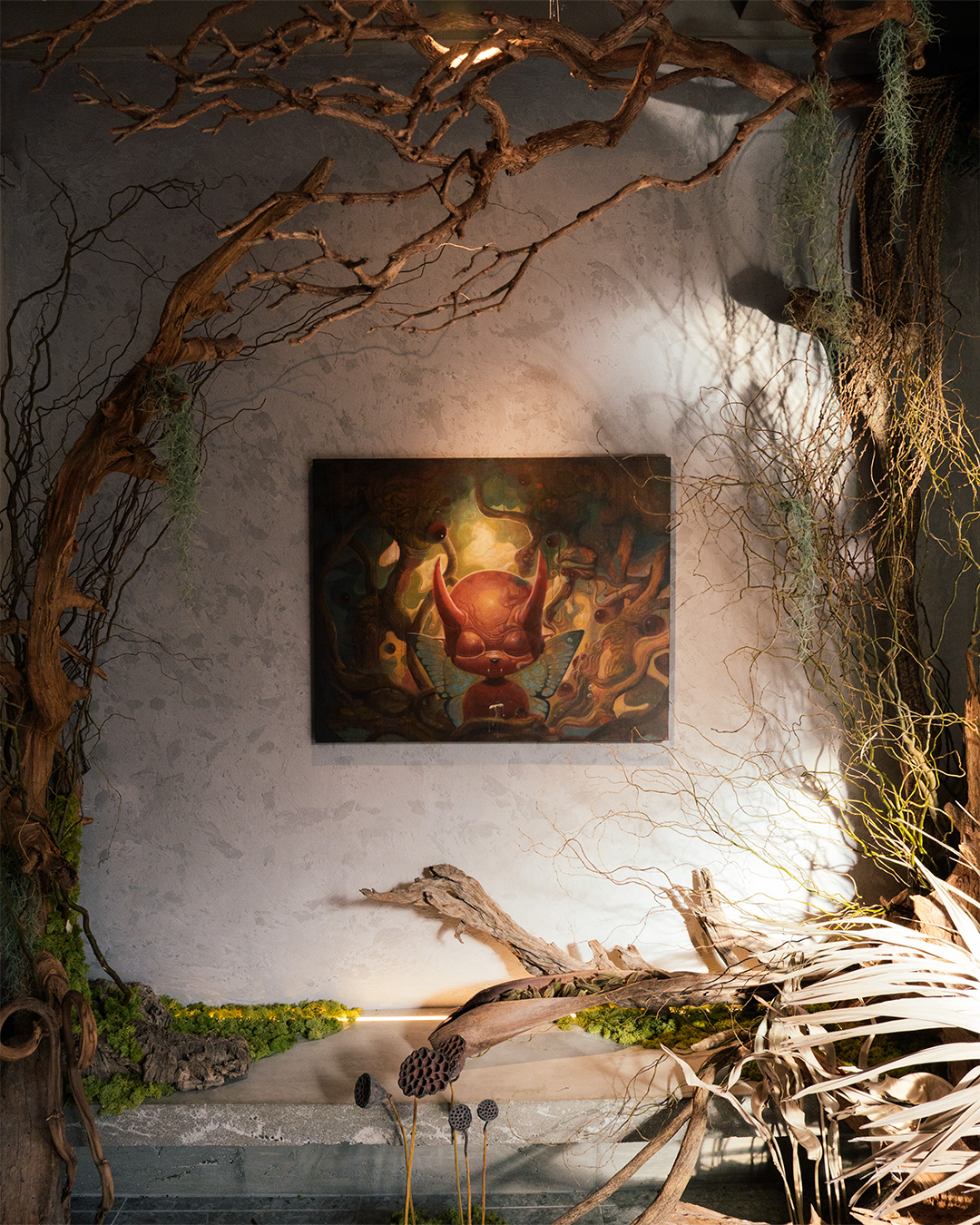
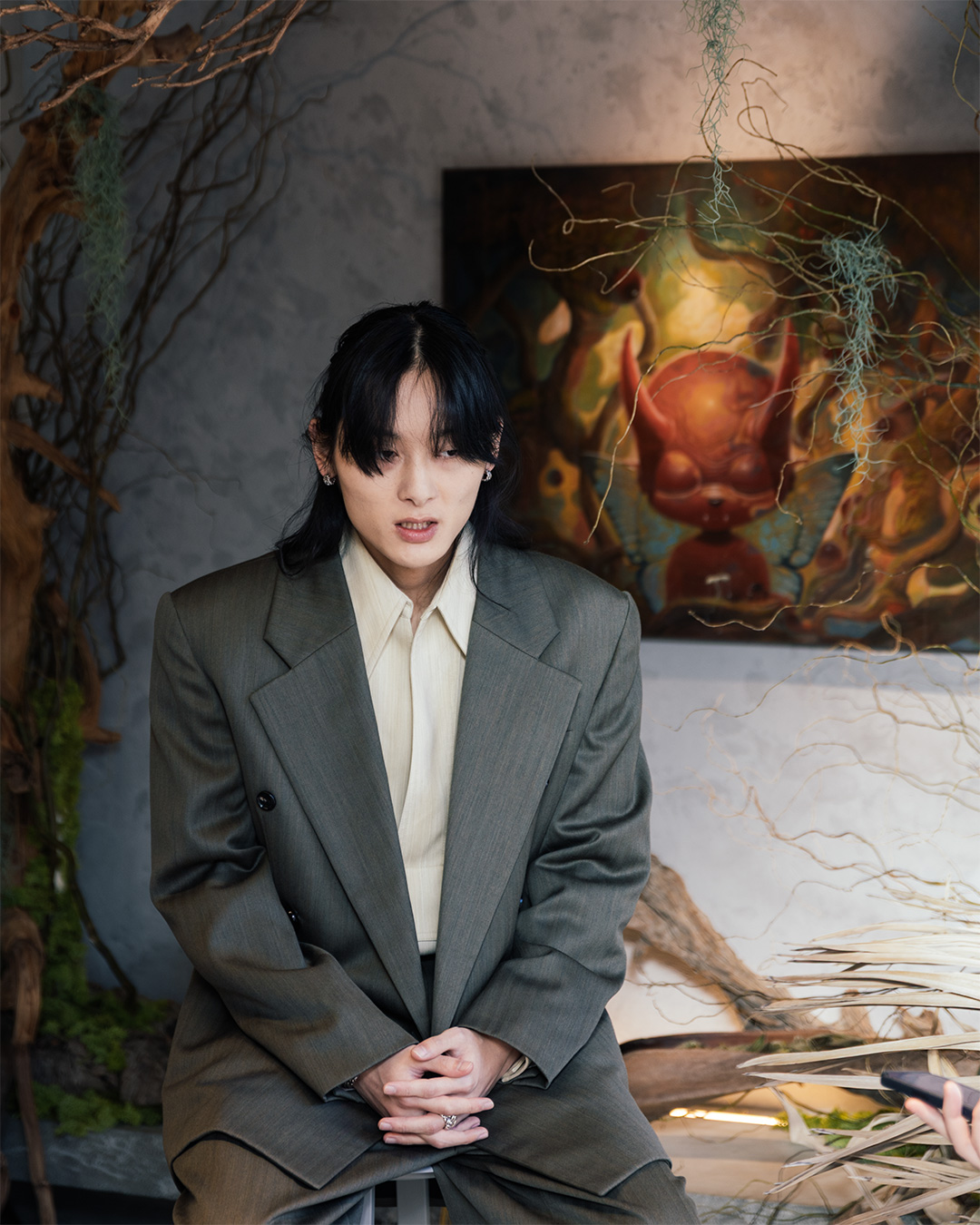
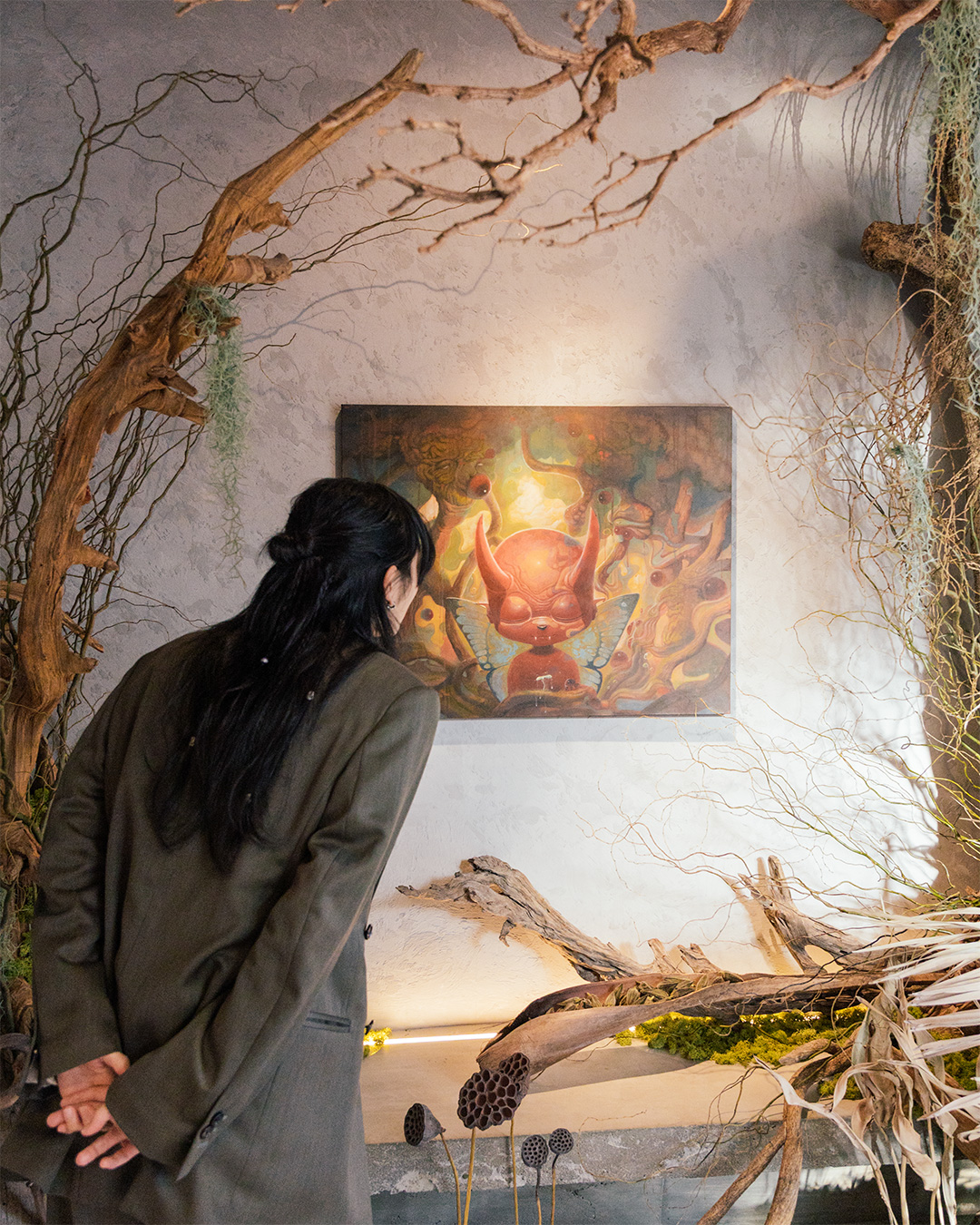
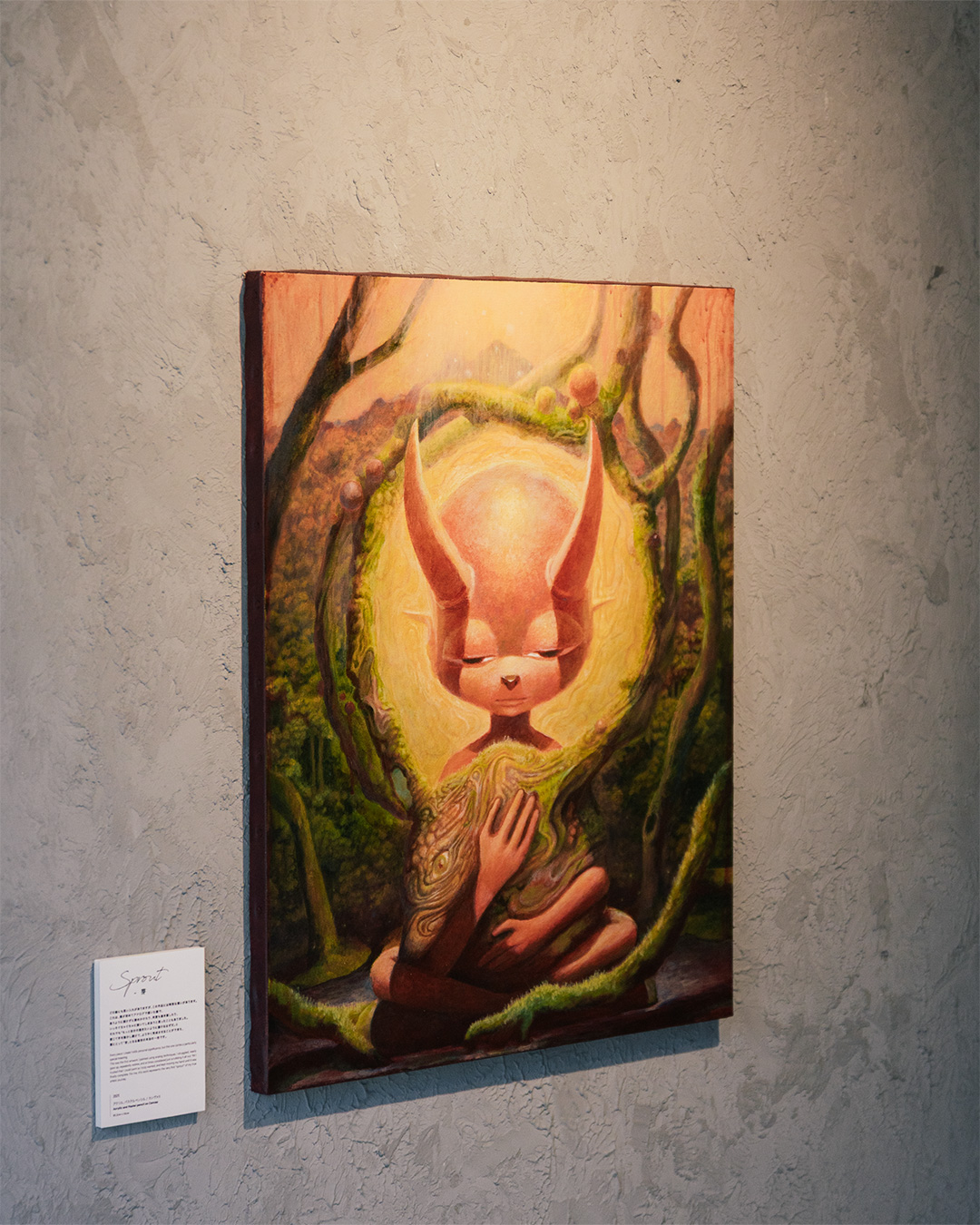
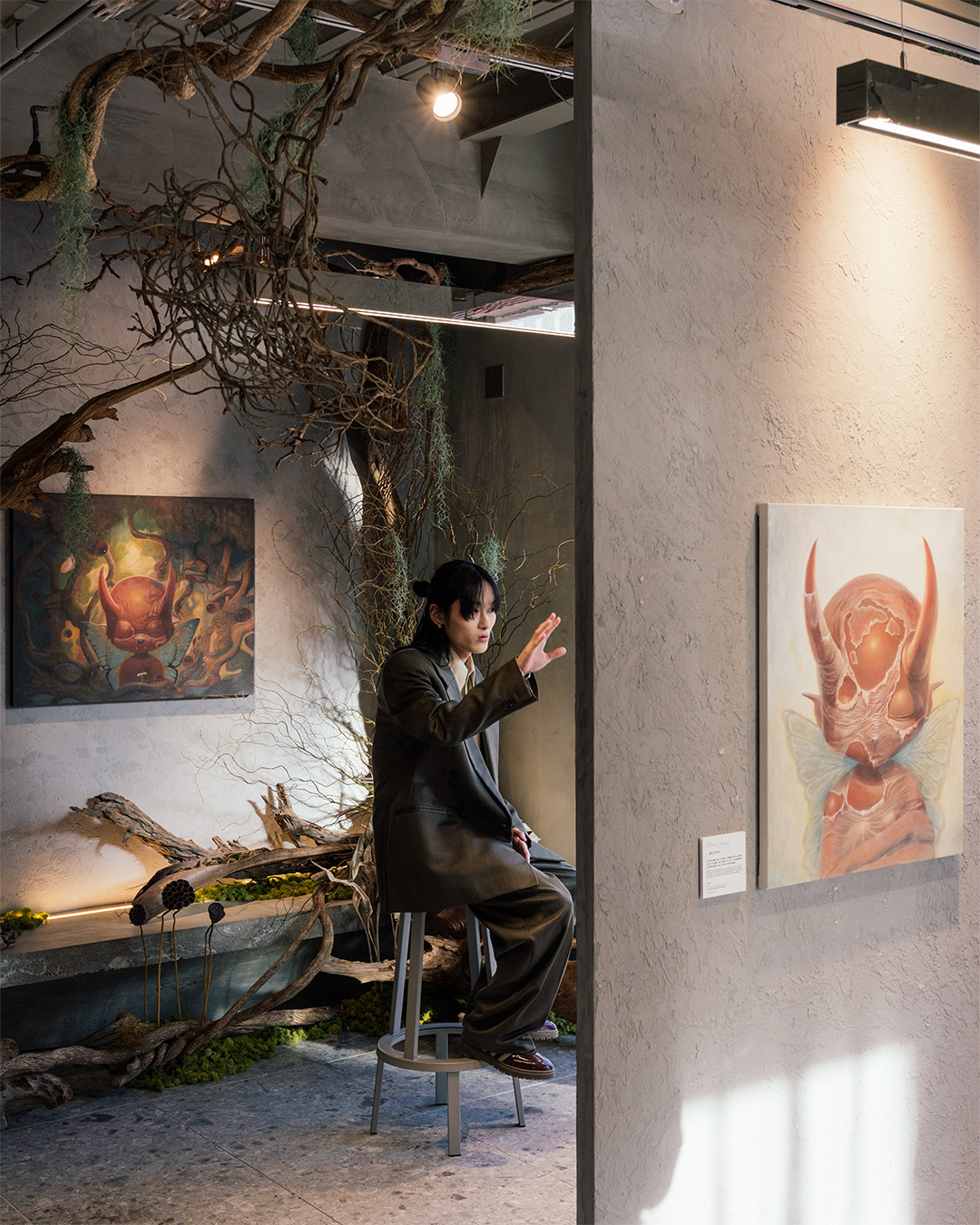
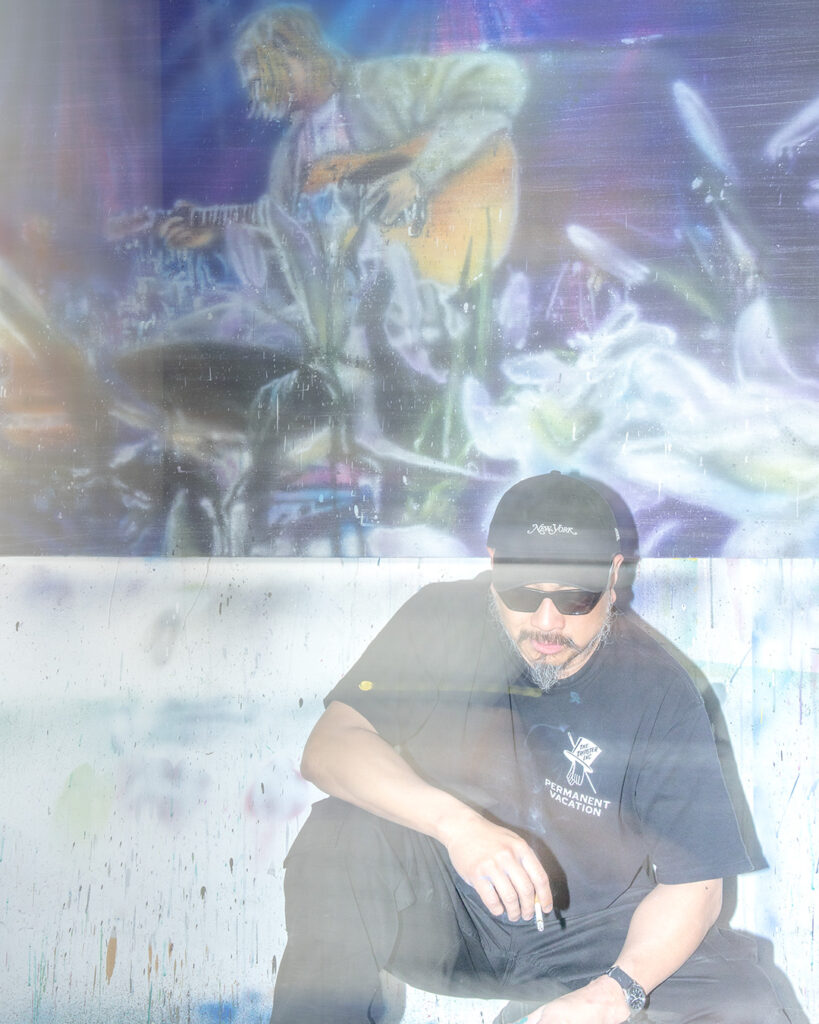
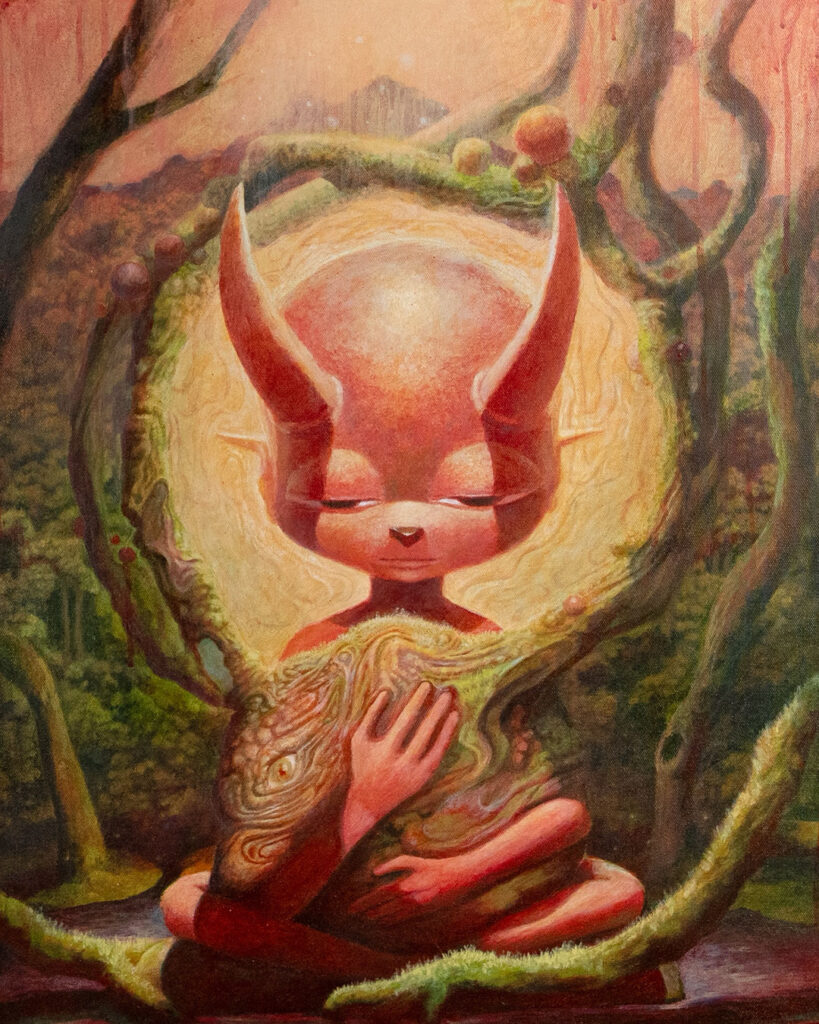
Graphic artist Sora Aota steps into a different kind of creative space with “Sprout,” his first exhibition built around hand-painted works. Known widely for the digital images that shaped his early career—including the Young Thug album cover that reached number one on the Billboard chart—Aota found himself returning to a quieter, more intimate process when he began painting with acrylic for the first time.
He describes this shift as something “pushing up from the soil,” a feeling that matched the exhibition’s title. Working on canvas meant accepting things he couldn’t fully control: the way a brush trembles, how color sinks into the surface, or how a patch of paint dries faster than expected. Those small accidents didn’t interrupt the work—they opened it up. Through them, he rediscovered the simple enjoyment of drawing, a sensation he hadn’t realized he’d been missing.
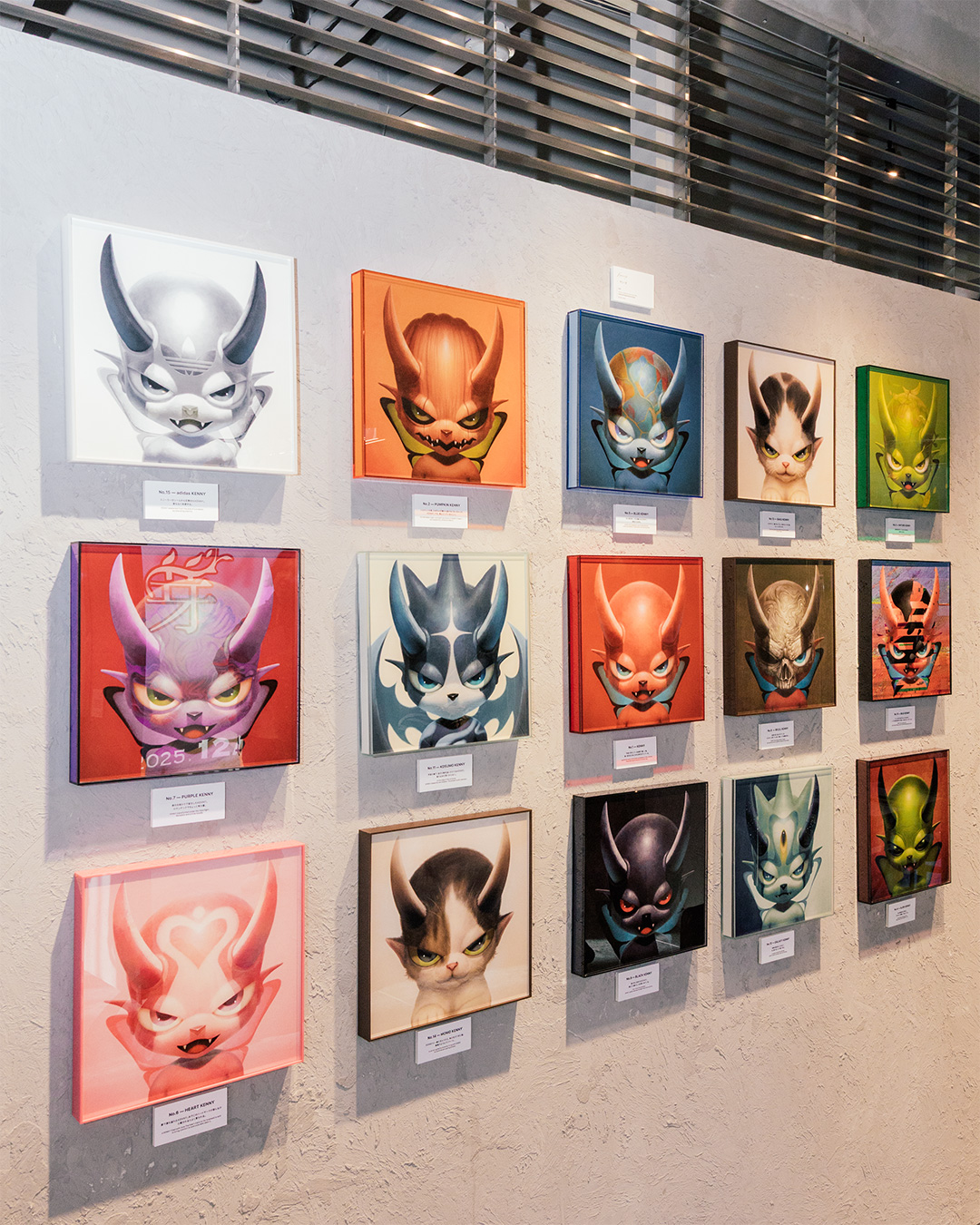
In conversation, Aota recalls how painting changed his sense of composition, how it made him rethink density and restraint, and how it led him back to ideas he thought he already understood. The exhibition also brings together his digital works and the character Kenny—an oni softened into a gentle, reflective presence—who continues to act as a vessel for feelings and stories that resist being spoken outright.
What meaning did you place in the exhibition title “Sprout” ?
The title of the exhibition is “Sprout”. Until now, my work has lived mostly in the digital space, but shifting to analog expression felt like something was finally emerging from the soil. Like a newly sprouted bud beginning to grow, the word symbolizes hope and a fresh beginning, so it felt right for this moment.
What led you to shift from digital work to creating in analog?
I’ve always wanted to challenge myself with new things, but the timing never felt quite right. The moment I thought, “I want to hold an exhibition,” I also knew that it had to be analog. That decision felt almost instinctive, and now it has finally taken shape.
How many analog works did you create for this exhibition, and how long did production take?
I created five analog works. I started in June and spent a few months completing them.
Did you discover anything new through the process of working in analog?
Digital work was always fun, but analog requires so many more steps that I initially worried it might be difficult. Once I actually started, though, even the “inconveniences” became enjoyable. It felt like returning to the basics. Realizing again how joyful drawing can be was the biggest discovery for me.
What differences did you feel between digital and analog in terms of control?
With digital, you can choose colors freely, adjust brightness, and fix mistakes instantly. Analog is completely different—you mix every color yourself, and even a straight line can waver depending on your hand. A tiny tremble changes the expression, and unexpected textures or smudges appear. Because things don’t always go as planned, new colors and expressions emerge. That unpredictability is the charm of analog and the biggest difference from digital.
Do those accidental elements ever change the direction of a piece?
Absolutely. Sometimes a messy, rough stroke suddenly looks like a pattern or a tree. Those moments sparked new ideas. There are works in this exhibition that I simply could not have created without analog.
Among the works in this exhibition, which piece is your personal favorite?
My favorite is the first analog piece I completed. It was difficult in the beginning, and I failed many times, but I kept layering and adjusting until it started to take shape. Through the process, I gradually learned how to approach analog techniques in my own way. That makes it especially meaningful to me.
Did you feel any personal growth or change throughout the production process?
Even with simple backgrounds, I found myself adding extremely detailed sections, and the density of my work changed. I used to focus only on adding more, but this time I learned to subtract as well. That shift felt like personal growth.
What do you hope viewers discover by seeing your digital and analog works exhibited together?
Digital work has clean, consistent lines. Analog pieces show grain, texture, and shifts in pressure that change depending on the viewing angle. Rather than focusing only on the subject itself, I’d love for people to enjoy those physical differences—the materials, the surface, the subtle irregularities. I think viewers will notice something new each time they look.
How do you plan to balance digital and analog work in the future?
I still want to continue creating digitally, but when it comes to exhibitions, I imagine analog pieces will increase. Working in analog brought me back to that beginner’s mindset, so I want to keep exploring—perhaps oil painting or even three-dimensional forms. I plan to keep challenging myself with new methods.
After this solo exhibition, what do you see as your next step as an artist?
This exhibition made me realize how comfortable I had become with digital. Every time I take on a new medium, I get to return to that sense of beginning again. I want to treasure that feeling while expanding my world through not only drawing but also sculptural and mixed-material approaches.