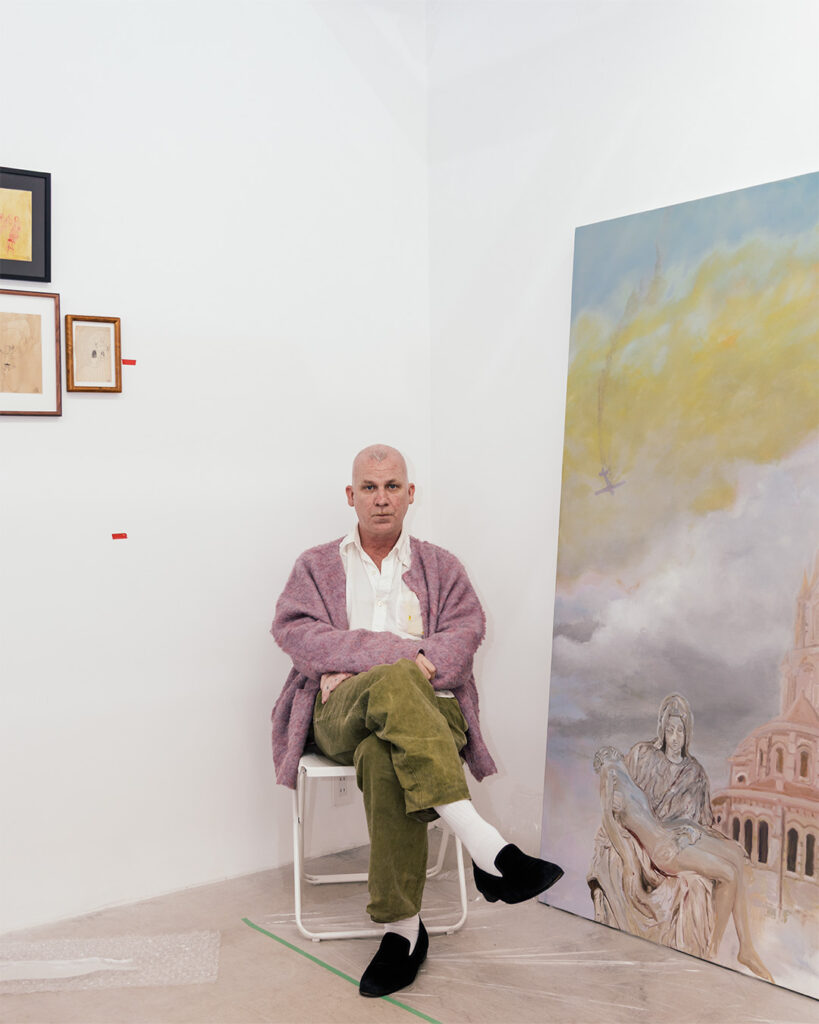
For over three decades, Jason Dill has stood at the forefront of skateboarding culture, serving as an enduring icon of Supreme and the founder of the influential brand Fucking Awesome. While his multidisciplinary talent has spanned photography and graphic art, painting has become the primary focus of his expression in recent years. To mark his solo exhibition LOOKING AT WHAT I’M SAYING: WORKS FROM 2016 TO 2026, Dill reflects on his journey from the streets to the canvas, the physical transition away from the board, and the productive anxiety that drives his craft.
Looking back over the last ten years, how has your art evolved?
Jason Dill: I’ve simply gotten better at it—both the craft itself and, more importantly, learning to sit still. My entire life, I was constantly on the move.
Now, my body is completely beat up from decades of skateboarding. I don’t skate anymore, so I actually want to stay in one place and dedicate real time to creating. I’ve always read books, but that used to be something reserved for travel or winding down before bed.
Getting older removed that frantic urge to chase things—the parties, the late nights, the constant rush. Life is much calmer now, and I’m painting for the right reasons. I won’t lie: I need money—people assume I’m rich, but I’m not—so naturally, I want to make work that sells. But above all, I want to make paintings that make people stop and say, “That’s truly beautiful”.
How did moving from early acrylics to oil paint shape that shift?
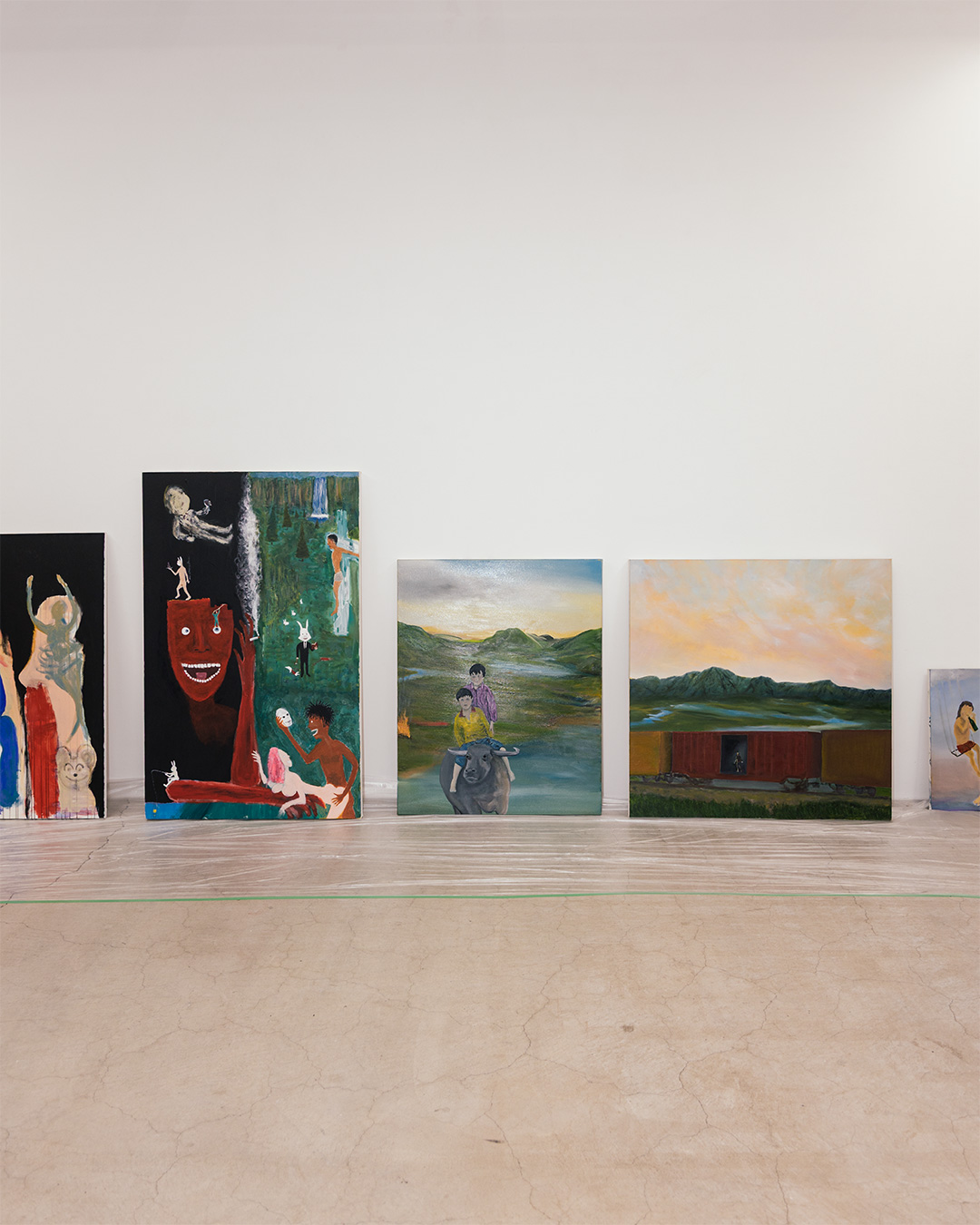
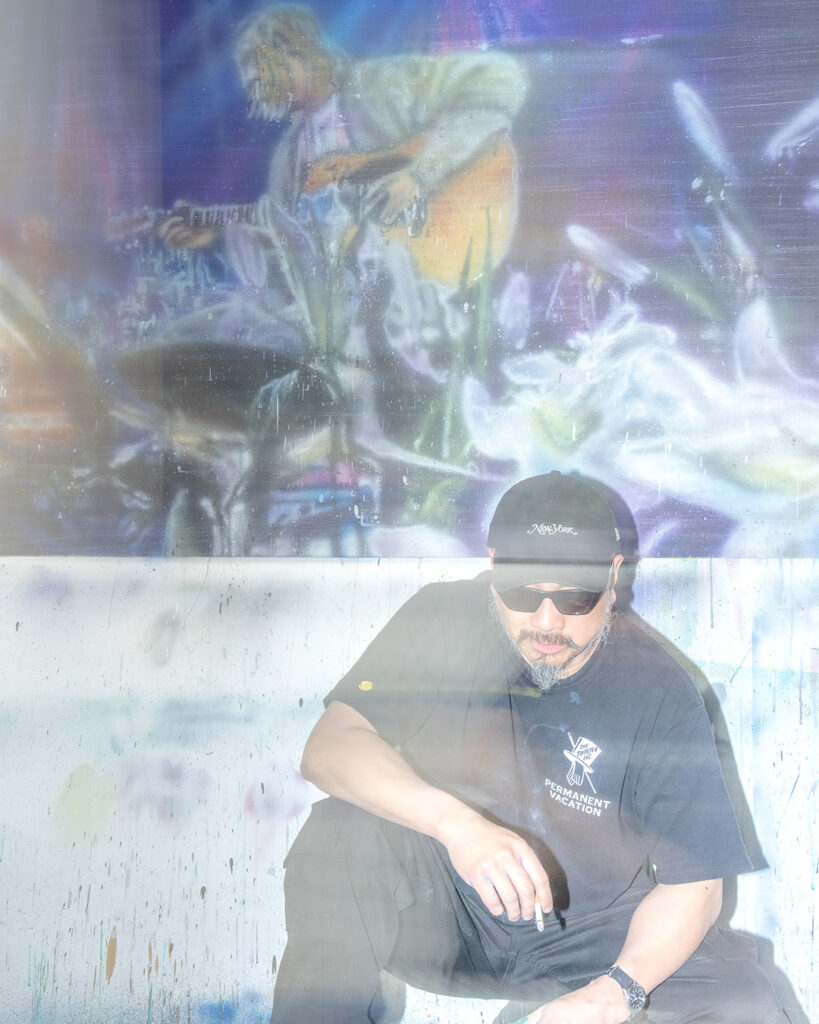
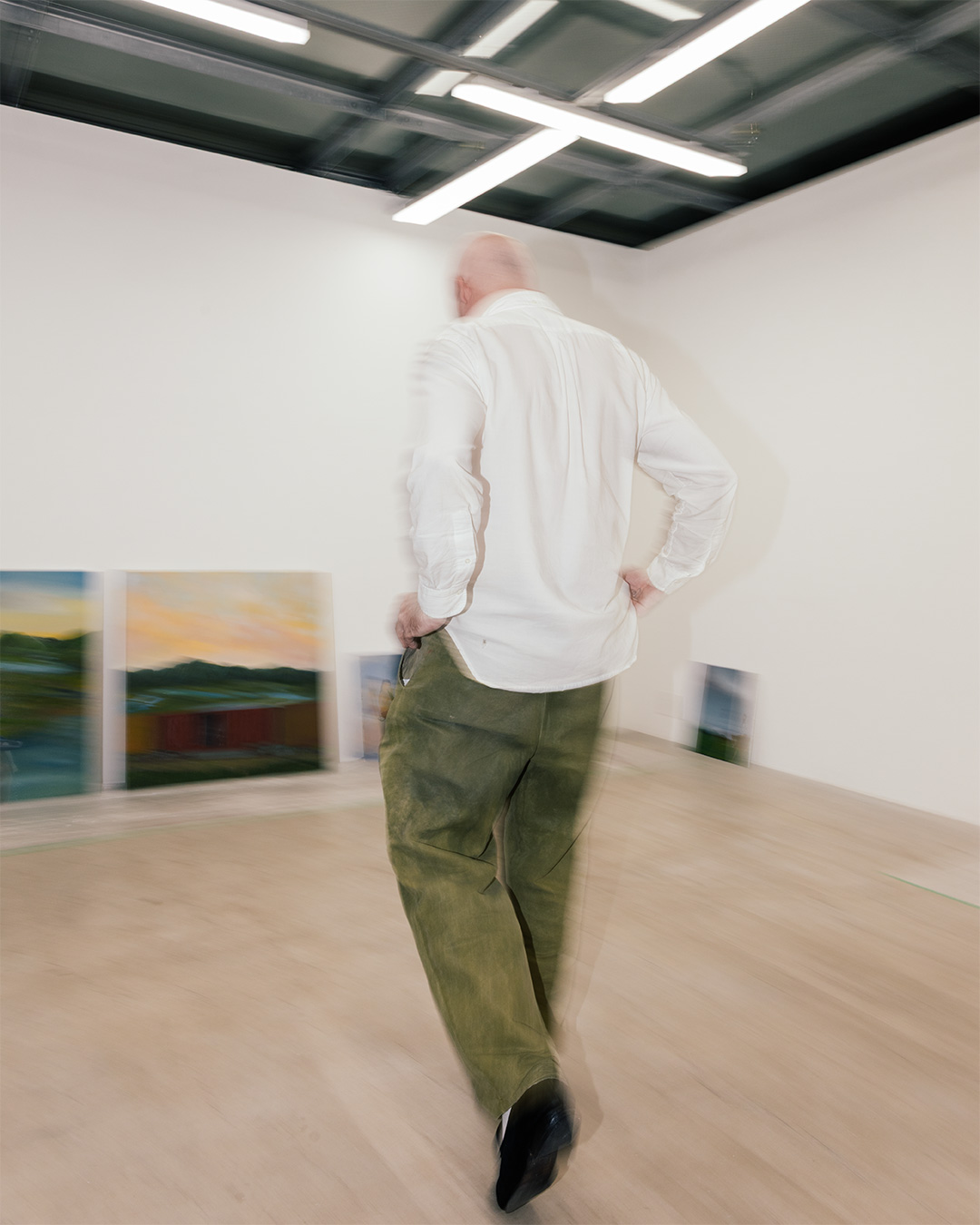
Dill: Up until about seven years ago, I would just walk up to a canvas and paint rapidly, hoping I’d see something I liked. The acrylic pieces behind me from ten years ago clearly reflect that early phase.
Switching to oil changed everything. Acrylic dries so quickly, but oil stays wet, allowing you to manipulate the paint, take your time, and explore. Painter friends kept encouraging me to push further. I’ve always used my drawings and graphics on clothing, but with oil painting, I wanted to wait until I was genuinely confident before doing a dedicated exhibition.
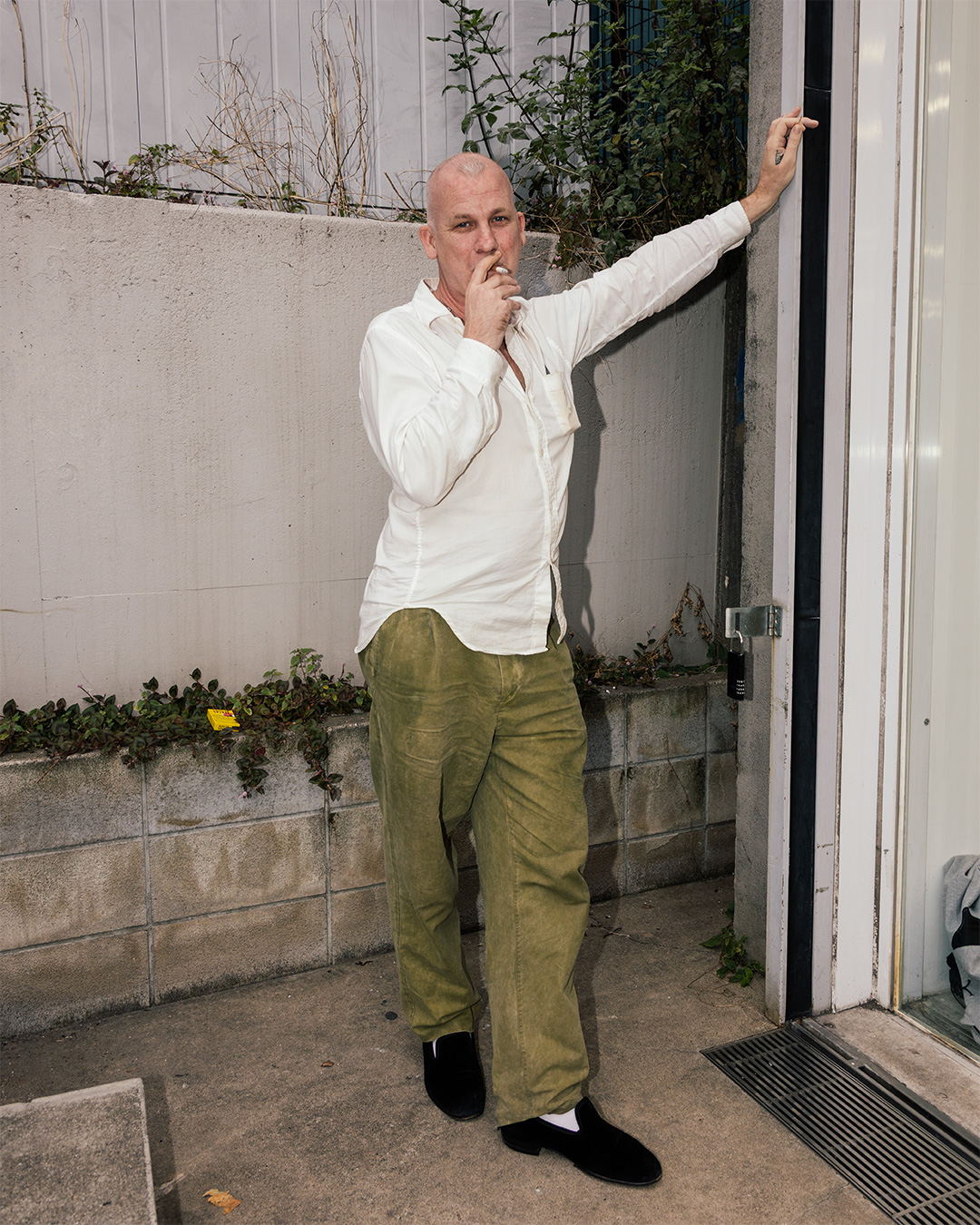
What originally drew you into painting so seriously?
Dill: Skateboarding was my whole life, but it came with countless broken bones, multiple surgeries, and getting knocked out on the concrete four times. My body has taken serious damage, which becomes even more apparent as you age.
Even when I was younger, I knew that one day I’d have to step off the board and do something else. Painting and writing stories are such a graceful way to grow older. Older people paint because they don’t want to crack their heads open anymore. Trust me—bleeding gets boring. In fact, that would make a great show title: Bleeding Gets Boring.
I’m turning 50 this month. I’ve reached a point where I just want to focus on a craft that doesn’t put me in the hospital.
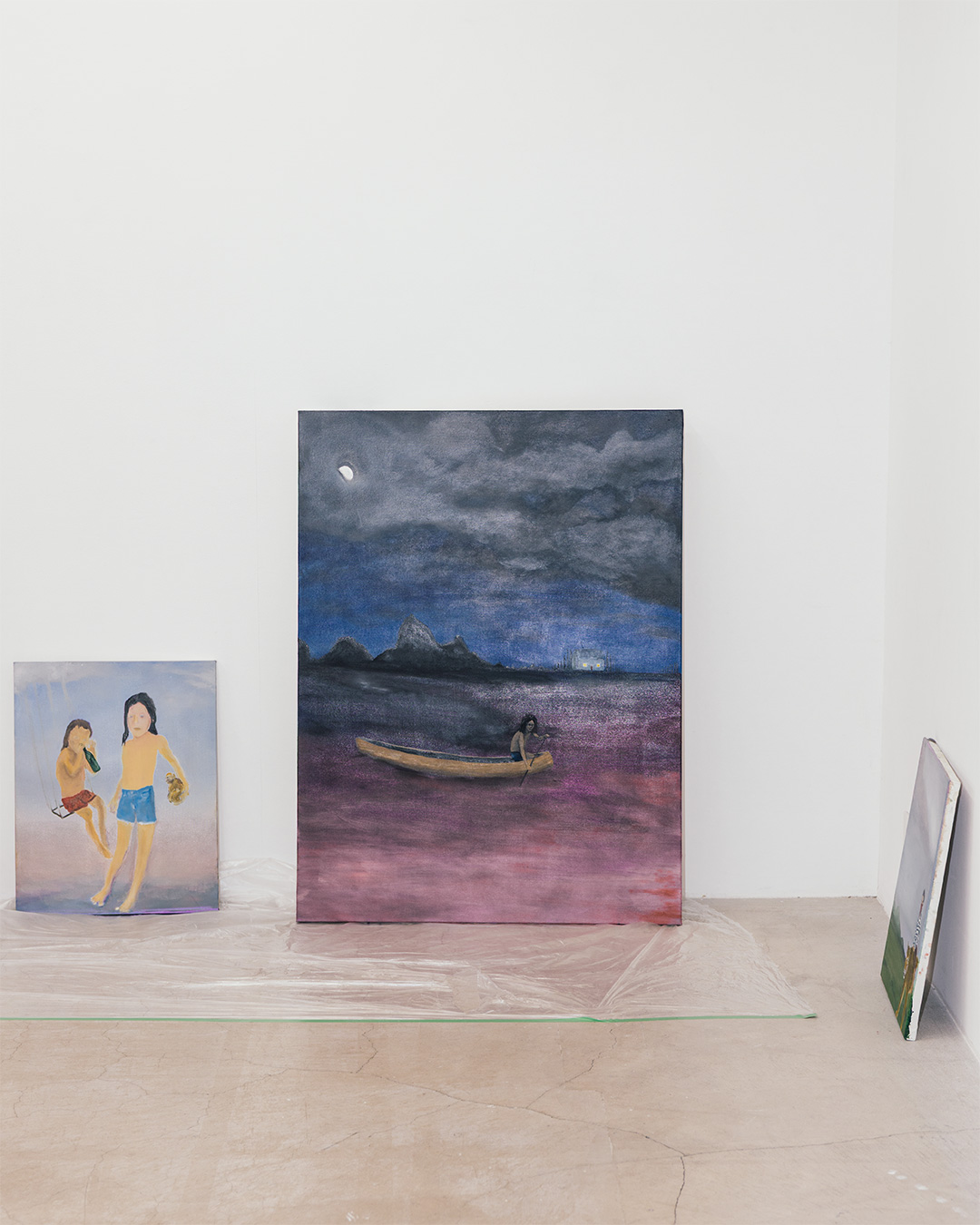
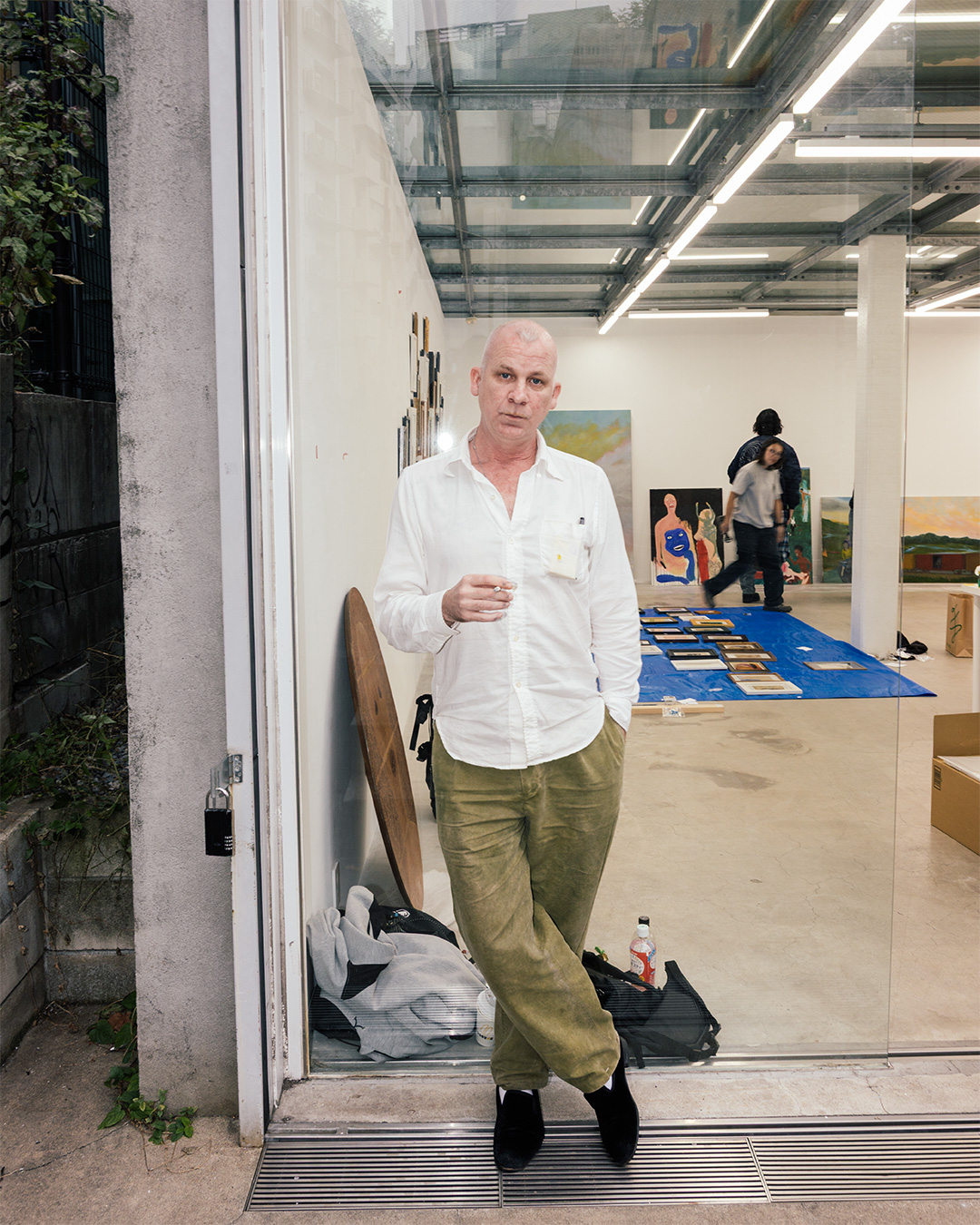
How do you decide what to paint? Do you start with a fixed concept, or discover it as you go?
Dill: I love painting nature—especially nature with human and animal interactions, skies, water, and shifting light. I don’t consider myself a master painter yet, but I’m comfortable with where I am right now.
I usually start with a landscape, step back, and sit with it for a long time. I’ll look at the water and the moonlight, and eventually think, “Let’s put a kid rowing a canoe right there”. When the elements click, there’s a distinct moment where I tell myself: “Don’t touch it anymore”.
Finishing a piece is always tough because the urge to add more is constant, but learning to let go and move on is vital. I always work on several canvases at once; working on only one at a time feels impossible to me.
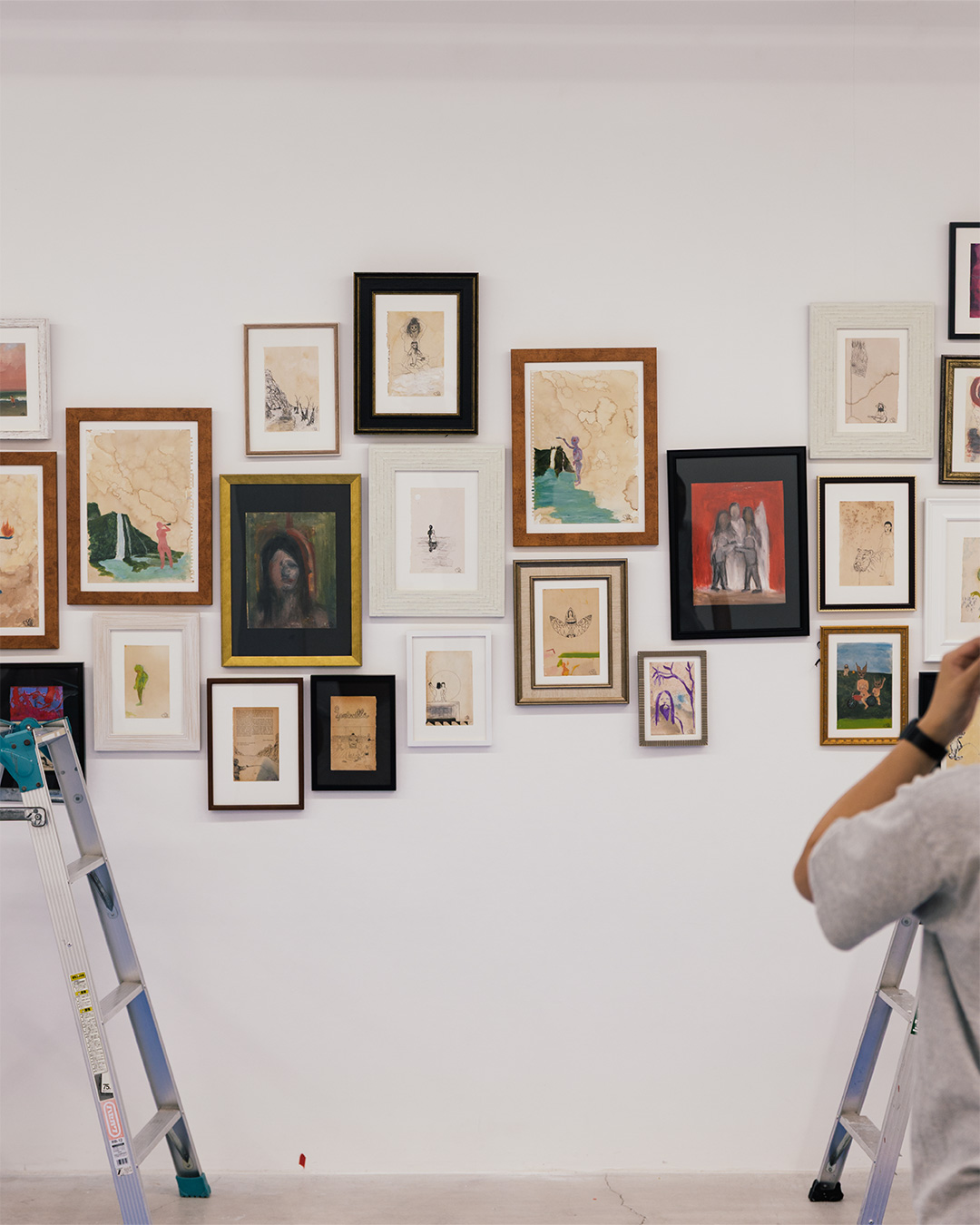
You’ve mentioned that whenever you start a painting, you feel insecure and terrified of ruining it. How does that anxiety serve your process?
Dill: People see my public persona and assume I must be the opposite of insecure, but starting a new painting genuinely terrifies me. There’s a constant anxiety of failure—a fear that I’ll ruin the work, or that previous successes were just dumb luck. When I spent three months painting in Korea, sitting in front of those blank canvases had me wondering, “What if I can’t do this anymore?”
Over time, I’ve realized that this fear is actually productive. When an actor takes on a role and feels nervous, that vulnerability usually produces a far better performance. Boxing is probably the only arena where pure arrogance helps. In painting, arrogance ruins the work.
In skating, projection and confidence were necessary, and my only real fear was physical injury. But with art, doubt is what keeps you honest.
How do Tokyo and the community here influence your work?
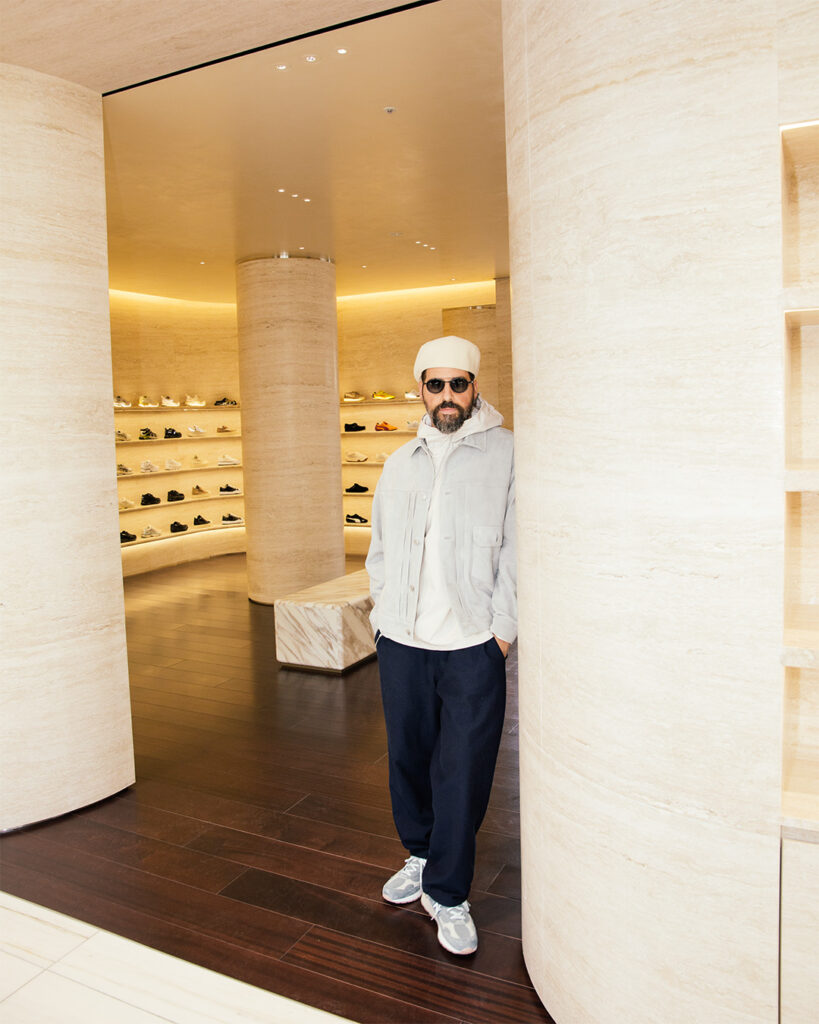
Dill: I consider myself incredibly lucky. My local friends take me deep into the authentic fabric of places like Fukuoka, Kyoto, Osaka, and Tokyo—places where I’m often the only outsider in a tiny izakaya or yakitori spot. A small bar named Chilita was a second home of mine for 16 years, and I was heartbroken when it closed. It had no bathroom, low ceilings, freezing winters, and sweltering summers, but it had incredible character.
That said, I’m cautious about words like “inspiration”. I don’t wait around for it; I just observe. When I’m on a train, I look out the window at isolated houses in the countryside and wonder what the people living there are doing.
I also dislike the question, “What’s your favorite?” I don’t have a single favorite book, painter, or film. Pinpointing one thing feels restrictive when what truly satisfies you is a wide, rich spectrum of experiences.
Looking ahead, is there another medium or discipline you want to explore?
Dill: I love playing the piano. I’ve never taken formal lessons, but whenever I stay somewhere with a piano, I’ll sit there for hours at night with a glass of wine, experimenting. Last year in London, I did about 40 takes of a 35-second melody for a video until it finally sounded right.
Beyond that, I’m very content. Running an apparel brand can eventually feel like an endless cycle of “rinse and repeat”. If I can sustain myself by creating paintings, traveling to do exhibitions, and connecting with people through art, that’s all I want to do for the rest of my life.